
Chemistry Research Topics for Undergraduates: Innovative Ideas to Explore
Are you an undergraduate student struggling to find the perfect chemistry research topic? You’re not alone.
Choosing a topic that sparks your curiosity and fits your academic goals can be overwhelming. But what if you could discover ideas that not only excite you but also stand out in your field? You’ll find a carefully curated list of chemistry research topics designed to inspire your creativity and guide you toward a successful project.
Whether you’re interested in green chemistry, biochemistry, or cutting-edge organic synthesis, these topics will help you take the first confident step in your research journey. Keep reading to unlock ideas that could shape your academic future.
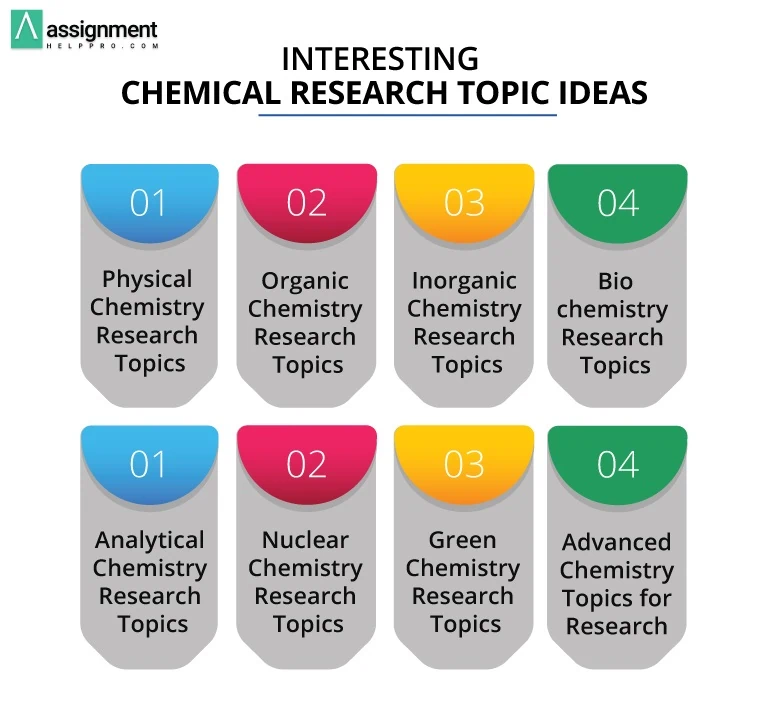
Credit: www.assignmenthelppro.com
Sustainable Chemistry
Sustainable chemistry aims to design chemical products and processes that reduce or eliminate the use and generation of hazardous substances. It focuses on meeting today’s needs without compromising the ability of future generations to meet theirs. If you care about how chemistry can help protect the environment and promote health, this area offers many exciting research possibilities.
Alternative Energy Sources
Alternative energy is a hot topic in chemistry research. You can study how chemical reactions power solar cells or develop better batteries for electric vehicles. Understanding how to make energy storage more efficient could lead to breakthroughs that reduce reliance on fossil fuels.
Have you ever wondered how the materials in a solar panel convert sunlight into electricity? Investigating these processes can reveal ways to improve energy capture and storage.
Chemistry In Recycling
Recycling relies heavily on chemistry to break down materials and turn them into something new. Research here might involve developing catalysts that speed up plastic degradation or creating methods to recover metals from electronic waste.
By improving recycling techniques, you help reduce landfill waste and lower the demand for new raw materials. What new chemical methods could make recycling faster and more cost-effective?
Green Chemistry Techniques
Green chemistry focuses on creating processes that minimize environmental impact. You could explore how to replace toxic solvents with safer alternatives or design reactions that produce less waste.
When I worked on a project using water-based solvents instead of traditional chemicals, I saw firsthand how small changes can make a big difference. What simple swaps in chemical procedures can you test to make your experiments greener?
Environmental Conservation Chemistry
This research area looks at how chemistry can protect ecosystems and reduce pollution. Studying how contaminants interact with soil and water helps develop better cleanup methods.
Think about the chemicals that enter rivers and affect wildlife. How can your research identify safer compounds or ways to neutralize pollutants before they cause harm?
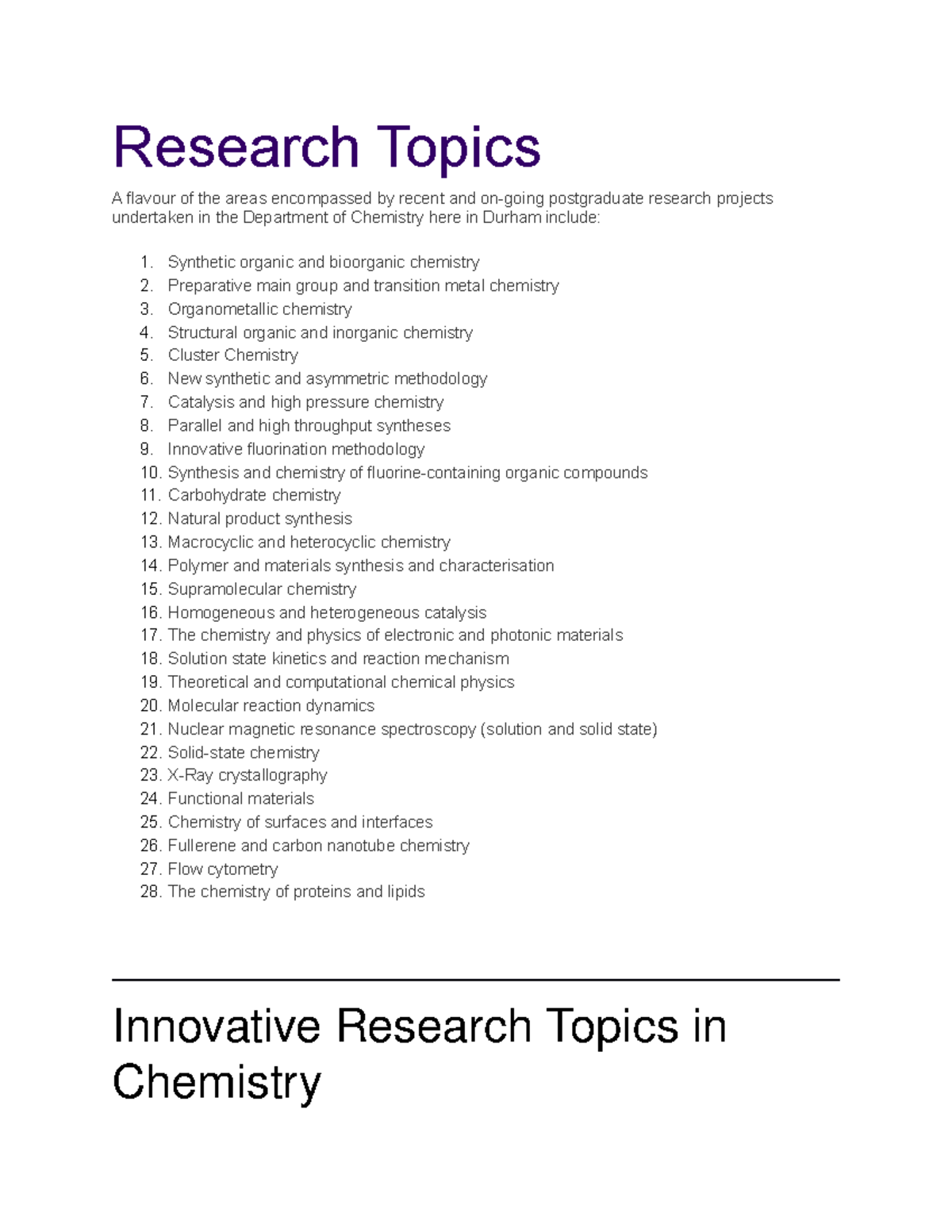
Credit: www.studocu.com
Organic Chemistry Projects
Organic chemistry projects offer undergraduates a chance to explore the building blocks of life and materials. These projects help students understand how molecules form, react, and change. Hands-on experience in organic chemistry sharpens problem-solving skills and deepens chemical knowledge.
Choosing the right project can reveal the beauty and complexity of organic compounds. Students can work on making new molecules, studying reaction steps, or exploring how aromatic compounds behave. These topics provide a solid foundation for future research or careers in chemistry.
Synthesis Of Complex Molecules
Synthesis involves creating complex molecules from simpler ones. It requires planning and careful execution of chemical reactions. Students learn how to combine different reagents to build target compounds. This project enhances skills in reaction design and laboratory techniques. Success depends on understanding reaction conditions and choosing the right reagents.
Aromatic Mechanisms
Aromatic compounds are stable molecules with unique ring structures. Studying their mechanisms explains how these rings react with other chemicals. Students investigate how electrons move within the aromatic system during reactions. This helps predict product formation and reaction speed. Research in this area can involve substitution or addition reactions on aromatic rings.
Organic Reaction Pathways
Reaction pathways show the step-by-step changes during a chemical reaction. Mapping these pathways helps students visualize how starting materials convert to products. This project involves identifying intermediates and transition states. It improves understanding of reaction kinetics and thermodynamics. Clear knowledge of pathways aids in controlling and optimizing reactions.
Biochemistry Topics
Biochemistry is a vital branch of chemistry that explores the chemical processes within living organisms. It connects biology and chemistry to understand how molecules interact in cells. Research in biochemistry offers many exciting topics for undergraduates. These topics help students learn key techniques and discover how life works at a molecular level.
Nucleic Acid Analysis
Nucleic acids like DNA and RNA carry genetic information. Studying their structure and function is essential. Undergraduates can research methods to analyze nucleic acids. Techniques such as gel electrophoresis and PCR (Polymerase Chain Reaction) are common. These help identify genetic sequences and mutations. Research in this area supports advances in genetics and medicine.
Biochemical Techniques
Biochemical techniques include methods to study proteins, enzymes, and other biomolecules. Students can explore chromatography, spectrophotometry, and enzyme assays. These tools reveal how molecules behave and interact. Learning these techniques builds practical skills for lab research. It also provides a foundation for advanced studies in biochemistry.
Radiation Biology Applications
Radiation biology studies how radiation affects living cells. This topic links biochemistry with physics and medicine. Research can focus on DNA damage caused by radiation and repair mechanisms. Students can investigate radiation’s role in cancer treatment or environmental effects. This area offers valuable insights into health and safety in medical fields.
Electrochemistry Studies
Electrochemistry studies form a vital part of undergraduate chemistry research. This field explores the relationship between electricity and chemical reactions. It helps students understand how chemical energy converts to electrical energy and vice versa.
Research in electrochemistry can lead to discoveries in batteries, sensors, and corrosion prevention. It offers practical experiments that enhance learning and skills. Let’s explore some core topics within electrochemistry studies that undergraduates can focus on.
Principles Of Electrochemistry
Electrochemistry is based on redox reactions involving electron transfer. Oxidation occurs when a substance loses electrons. Reduction happens when a substance gains electrons. These reactions generate electric current or are driven by it. Understanding electrode potentials and the movement of ions is key. The Nernst equation helps calculate cell potentials under different conditions.
Electrochemical Cells
Electrochemical cells convert chemical energy into electrical energy or the opposite. There are two main types: galvanic (or voltaic) and electrolytic cells. Galvanic cells generate electricity spontaneously through redox reactions. Electrolytic cells use electrical energy to drive non-spontaneous reactions. Studying these cells involves measuring voltage, current, and reaction rates. Simple setups like the Daniell cell are common in undergraduate labs.
Applications In Energy Storage
Energy storage is a major application of electrochemistry research. Batteries store and release energy through controlled chemical reactions. Research topics include improving battery efficiency, lifespan, and safety. Fuel cells convert chemical fuel into electricity cleanly and efficiently. Supercapacitors store energy electrostatically for rapid charge and discharge. These applications are crucial for renewable energy and portable devices.
Chemical Roles In Agriculture
Chemistry plays a vital role in agriculture. It helps improve crop yield and protect plants. Understanding chemical processes can lead to better farming methods. Students can explore various topics that show how chemistry supports agriculture.
Pest Management Chemistry
Pest management uses chemicals to control harmful insects and pests. These chemicals protect crops from damage. Research can focus on creating safer and more effective pesticides. Studying natural pest control methods is also important. This area aims to reduce chemical harm to the environment.
Fertilizer Development
Fertilizers provide nutrients that plants need to grow. Chemistry helps design fertilizers that release nutrients slowly. This improves plant health and reduces waste. Research can explore new compounds that boost soil fertility. Developing eco-friendly fertilizers is a key goal in this field.
Soil Chemistry
Soil chemistry studies the chemical composition of soil. It affects nutrient availability and plant growth. Research can analyze how chemicals interact in soil environments. Understanding soil pH and mineral content helps improve farming. This knowledge supports sustainable and productive agriculture practices.

Credit: michaelseery.com
Materials Chemistry
Materials chemistry studies the structure and properties of substances. It helps create new materials with useful functions. This field combines chemistry, physics, and engineering.
Undergraduates can explore many topics in materials chemistry. Research here offers hands-on experience with exciting materials. These topics include crystal structures, nanomaterials, and polymers.
Crystal Structures
Crystal structures show how atoms arrange in solids. Understanding these patterns helps predict material behavior. Students can study how crystals form and grow. Analyzing crystal defects reveals weaknesses in materials. Research in this area improves electronics and catalysts.
Nanomaterials
Nanomaterials are tiny particles with special properties. Their size changes how they conduct electricity or heat. Research explores methods to create stable nanomaterials. Students test nanomaterials for drug delivery or sensors. This topic links chemistry with medicine and technology.
Polymers And Composites
Polymers are large molecules made of repeating units. Composites combine polymers with other materials for strength. Research focuses on new polymers with better durability. Students study biodegradable polymers to reduce pollution. This field supports advances in packaging and construction.
Analytical Chemistry Approaches
Analytical chemistry plays a vital role in understanding the composition of substances. It uses various techniques to detect, identify, and measure chemicals in samples. These approaches help students explore the molecular world with precision and clarity.
Undergraduate research in analytical chemistry offers hands-on experience with tools and methods. It encourages problem-solving and critical thinking. The following sections highlight key analytical chemistry approaches popular in research projects.
Spectroscopic Methods
Spectroscopic methods use light to analyze chemical substances. Techniques such as UV-Vis, IR, and NMR spectroscopy reveal detailed information about molecules. These methods help identify chemical structures and concentrations. Students can study how molecules absorb or emit light at different wavelengths.
Chromatography Techniques
Chromatography separates mixtures into individual components. Common types include gas chromatography (GC) and liquid chromatography (LC). These techniques allow precise analysis of complex samples. Undergraduates can explore separation efficiency and detection limits in their projects. Chromatography is essential for purity testing and quality control.
Chemical Sensors
Chemical sensors detect specific substances in an environment. They convert chemical information into measurable signals. Sensors often use electrodes or optical devices to monitor changes. Research can focus on sensor sensitivity and selectivity. This field supports advancements in environmental monitoring and medical diagnostics.
Research Tips For Undergraduates
Research for undergraduate chemistry students can feel challenging without clear guidance. Effective tips help focus efforts and produce meaningful results. Thoughtful planning and topic selection are key steps to success in research.
Good research begins with solid preparation. These tips help you develop ideas, narrow your focus, and choose feasible projects. Follow simple steps to make your research journey smoother and more productive.
Brainstorming Ideas
Start by writing down all topics that interest you. No idea is too small or too broad at this stage. List anything related to chemistry that sparks curiosity. Use mind maps or free writing to explore different angles. This process opens new pathways and reveals connections.
Choosing A Focused Topic
Select one idea from your list that feels most exciting. Narrow it down by asking specific questions. What problem will you solve? Which chemical process or material will you study? A focused topic guides your research and makes it manageable. Avoid broad subjects that can overwhelm your time and resources.
Balancing Interest And Feasibility
Interest keeps motivation high, but feasibility ensures completion. Check if your topic matches available lab equipment and materials. Consider your current skills and time constraints. Choose a topic you can complete within your semester or year. Discuss your ideas with professors to get practical advice.
Frequently Asked Questions
What Is The Best Topic For Research In Chemistry?
The best chemistry research topics focus on sustainability, green chemistry, organic synthesis, alternative energy, and environmental conservation. These areas offer innovative solutions and practical applications. Choose a topic that matches your interest and available resources for impactful research.
What Are 5 Good Research Topics?
Five good research topics are sustainable energy chemistry, behavioral economics, biochemistry in nursing, green organic synthesis, and psychological effects of space travel. These topics are current, impactful, and suitable for undergraduate research projects.
What Are The Most Interesting Chemistry Topics?
Interesting chemistry topics include biochemistry, green chemistry, electrochemistry, organic synthesis, and environmental chemistry. These fields explore life processes, sustainable methods, energy, and molecular structures.
How To Pick An Undergraduate Research Topic?
Choose a topic that interests you and fits your field of study. Research current trends and gaps. Brainstorm ideas and consult mentors for guidance. Select a manageable, original topic with available resources and clear objectives.
Conclusion
Choosing a good chemistry research topic helps build strong skills. Explore areas that interest you and solve real problems. Simple topics can lead to exciting discoveries and learning. Start small, stay curious, and enjoy the research process. This journey can shape your future in science.
Keep exploring and stay passionate about chemistry.