
Latest Research Topics in Chemistry: Breakthroughs Shaping Science
Are you curious about what’s shaping the future of chemistry? Whether you’re a student, researcher, or simply passionate about science, knowing the latest research topics can open new doors for your understanding and opportunities.
From breakthroughs in sustainable chemistry to innovations in drug delivery and materials science, the field is evolving faster than ever. You’ll discover the hottest areas that scientists are exploring right now—insights that could spark your next big idea or deepen your knowledge.
Keep reading to find out which chemistry topics are making waves and why they matter to you.
Bioorthogonal Chemistry
Bioorthogonal chemistry studies chemical reactions that occur inside living systems without disturbing natural processes. This field enables scientists to label molecules in cells and organisms selectively. These reactions happen quickly and safely, making them valuable for medical and biological research.
Scientists use bioorthogonal chemistry to track and modify biomolecules in real time. It helps to understand diseases and develop new treatments. This approach opens new paths in drug delivery and diagnostics.
Applications In Cancer Treatment
Bioorthogonal chemistry offers new methods to target cancer cells precisely. It allows drugs to activate only near tumors, reducing side effects. Scientists can attach therapeutic agents to molecules that bind cancer cells specifically. These reactions happen inside the body, improving treatment accuracy.
Researchers design prodrugs that remain inactive until they reach tumor sites. Bioorthogonal reactions then trigger drug activation. This method lowers toxicity and improves patient outcomes. It also helps visualize tumors through imaging techniques, aiding early diagnosis.
Protein Modification Techniques
Bioorthogonal chemistry enables precise modification of proteins in living cells. Scientists attach labels or functional groups without affecting protein function. This helps study protein behavior and interactions in real time.
Common techniques include click chemistry and strain-promoted reactions. These methods tag proteins with fluorescent markers for imaging or therapeutic molecules for treatment. They work under mild conditions, preserving cell health.
Protein modification via bioorthogonal chemistry advances drug development and biomarker discovery. It allows detailed analysis of protein roles in diseases and biological systems.
Transition Metal Catalysis
Transition metal catalysis plays a vital role in modern chemistry. It helps speed up chemical reactions and creates new materials. Scientists focus on these metals because they can change how molecules form and break apart. This makes many chemical processes more efficient and less costly.
Recent research explores how to use transition metals in greener ways. It also aims to discover new reactions that produce less waste. This field bridges the gap between basic science and practical applications, such as medicine and energy.
Earth-abundant Metals
Research now targets earth-abundant metals like iron, cobalt, and nickel. These metals are cheaper and more available than precious metals. Scientists study how these metals can replace rare metals in catalysis. The goal is to create catalysts that are both effective and sustainable.
Using earth-abundant metals reduces environmental impact. These metals often work well under mild conditions. They also offer unique reaction pathways not possible with precious metals. This area of research supports green chemistry and cost reduction.
Organic Synthesis Advances
Transition metal catalysts have transformed organic synthesis. They allow chemists to build complex molecules step-by-step. New methods enable selective bond formation with high precision.
Recent studies show advances in forming carbon-carbon and carbon-heteroatom bonds. These advances simplify the synthesis of pharmaceuticals and fine chemicals. Catalysts now operate under milder conditions and with better control.
Scientists also explore catalysts that work in water or air, reducing the need for toxic solvents. This progress opens doors for more environmentally friendly manufacturing processes.
Flow Chemistry And Automation
Flow chemistry and automation have become central in modern chemical research. These methods improve how scientists create and test chemical compounds. The use of continuous flow systems speeds up reactions and ensures better control over conditions. Automation helps reduce human error and increases reproducibility in experiments. Together, they offer a more efficient and safer approach to chemical synthesis.
Automated Synthesis Systems
Automated synthesis systems use machines to carry out chemical reactions. These systems can mix, heat, and monitor reactions without human help. Automation allows chemists to run multiple experiments quickly. It also helps in scaling up from small to large production. Many labs now use robots to prepare complex molecules. This reduces time and cost while improving accuracy.
Microfluidic Technologies
Microfluidic technologies involve tiny channels that control fluid flow precisely. These devices handle small amounts of chemicals in a continuous stream. They allow fast mixing and heat transfer, enhancing reaction speed. Microfluidics also supports safer handling of hazardous substances. Researchers use these systems for drug discovery and material synthesis. Their small size saves space and reduces waste in labs.
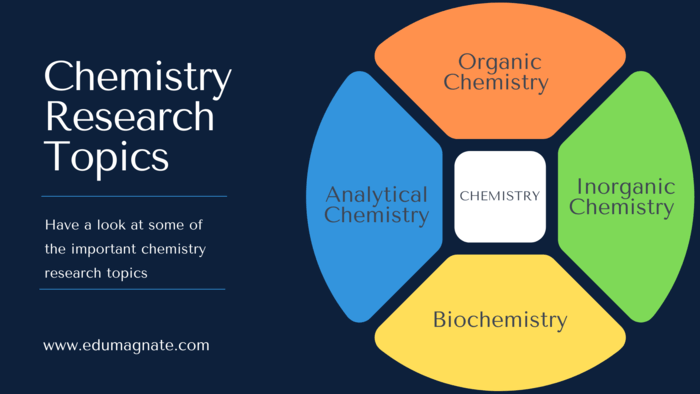
Credit: www.edumagnate.com
Sustainable Chemistry
Sustainable chemistry focuses on creating chemical processes that protect the environment. It aims to reduce waste, use renewable resources, and lower energy consumption. This field seeks safer, cleaner ways to produce chemicals and materials.
Researchers work on methods that avoid harmful substances and minimize pollution. Sustainable chemistry supports a healthier planet by promoting eco-friendly innovations. Two key areas gaining attention are biomass upgrading and green catalysts.
Biomass Upgrading
Biomass upgrading transforms plant materials into valuable chemicals and fuels. It uses natural resources like wood, crops, and waste. This process reduces dependence on fossil fuels and cuts greenhouse gas emissions.
Scientists develop techniques to break down biomass efficiently. New methods convert biomass into biofuels, bioplastics, and other products. These products are renewable and biodegradable, supporting a circular economy.
Green Catalysts
Green catalysts speed up chemical reactions without harmful effects. They help lower energy use and reduce toxic byproducts. These catalysts often use earth-friendly metals or enzymes instead of rare or dangerous materials.
Researchers design catalysts that work well in water or mild conditions. This approach makes chemical manufacturing safer and cleaner. Green catalysts play a vital role in sustainable chemistry’s future.
Materials Chemistry
Materials chemistry explores the design and creation of new materials with unique properties. It combines chemistry, physics, and engineering to develop substances that improve technology and daily life. Researchers focus on understanding the structure and behavior of materials at the molecular level. This knowledge helps create advanced materials for electronics, energy, medicine, and more.
Crystal Engineering
Crystal engineering studies how molecules arrange themselves in solid forms. Scientists design crystals with specific shapes and functions. This helps create materials with improved strength, conductivity, or optical properties. Research in this area aims to control crystal growth to produce better pharmaceuticals and electronic components. Understanding molecular interactions is key to building efficient and stable crystals.
Membranes And Sensors
Membranes are thin layers that separate substances or filter molecules. Research focuses on creating membranes with high selectivity and durability. These materials are useful in water purification, gas separation, and energy storage. Sensors detect changes in the environment or biological systems. Advances in materials chemistry improve sensor sensitivity and speed. Combining membranes and sensors leads to smart devices for health monitoring and environmental protection.
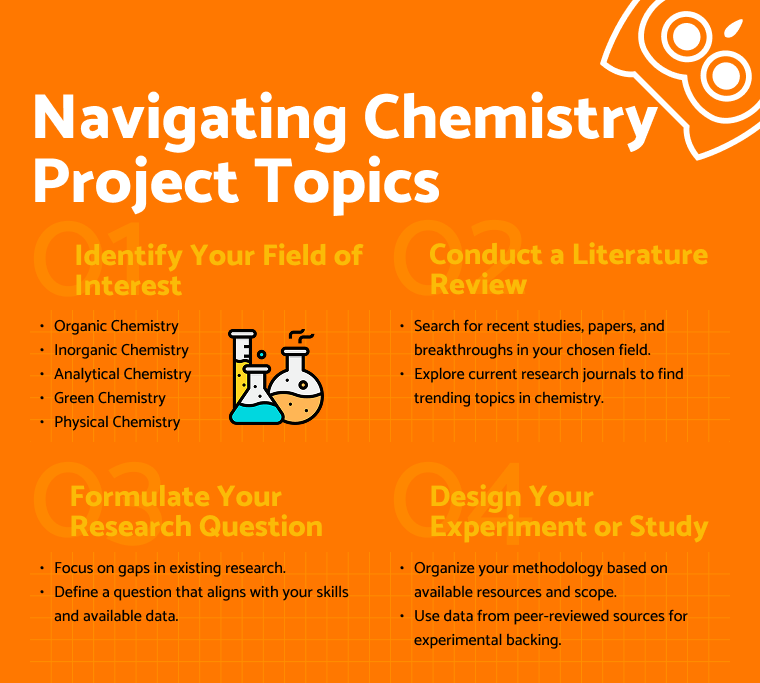
Credit: papersowl.com
Quantum Chemistry
Quantum chemistry explores how quantum mechanics explains chemical systems. It studies atoms and molecules at the smallest level. This field helps predict behaviors and properties with high accuracy.
Researchers use quantum chemistry to understand reactions and design new materials. It bridges physics and chemistry, offering insights that classical models cannot provide. The latest research focuses on practical applications and computational methods.
Quantum Technology Applications
Quantum technology applies quantum chemistry principles to real-world problems. It improves sensors, computing, and communication devices. Quantum computers solve complex chemical problems faster than traditional ones.
Quantum sensors detect tiny changes in magnetic and electric fields. These sensors enhance precision in medical imaging and environmental monitoring. Researchers develop new materials for quantum devices with improved stability and efficiency.
Molecular Modeling
Molecular modeling uses quantum chemistry to simulate molecules on computers. It predicts structures, energies, and reactions before experiments. This saves time and resources in drug design and material science.
Advanced algorithms make simulations more accurate and faster. Scientists study large biomolecules and catalysts that are hard to test in labs. Molecular modeling guides experiments by providing detailed molecular insights.
Chemical Biology
Chemical biology explores how chemicals interact within living systems. It combines chemistry and biology to understand life processes at the molecular level. Scientists use this field to design new molecules that can affect biological functions.
Research in chemical biology helps create tools to study cells and develop new medicines. It focuses on how small molecules influence proteins, DNA, and other cellular components. This knowledge drives innovations in health and disease treatment.
Drug Delivery Systems
Drug delivery systems aim to improve how medicines reach target cells. Researchers develop carriers that protect drugs until they reach specific body parts. These systems increase drug effectiveness and reduce side effects.
Nanoparticles and liposomes are common carriers studied in recent research. They can transport drugs through the bloodstream and release them at controlled rates. Scientists also explore smart delivery systems that respond to the body's signals.
Bioorganic Chemistry Innovations
Bioorganic chemistry studies molecules that combine biological and organic chemistry. It focuses on designing synthetic molecules that mimic natural biological compounds. These molecules help understand biological pathways and create new therapies.
Recent innovations include developing enzyme inhibitors and molecular probes. These tools allow detailed study of protein functions in cells. Researchers also create bioorthogonal reactions that occur inside living organisms without harm.
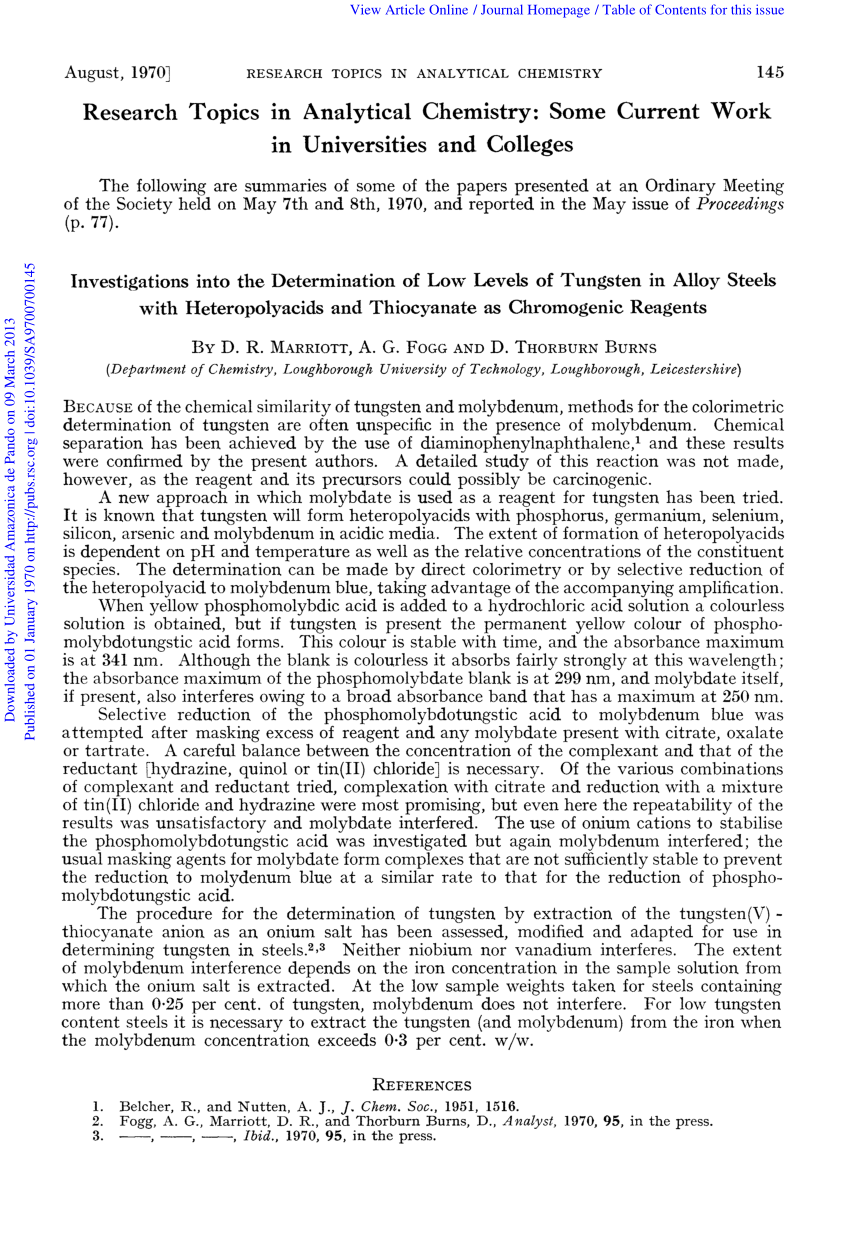
Credit: www.researchgate.net
Advanced Synthetic Methods
Advanced synthetic methods have transformed chemical research. They allow scientists to build complex molecules faster and with greater precision. These methods focus on creating new bonds and modifying molecules in unique ways. This progress helps in drug development, materials science, and chemical manufacturing.
Researchers explore various techniques to improve efficiency and selectivity. These methods reduce waste and energy use, making chemistry greener. Two key areas gaining attention are C–H activation and C–C coupling techniques.
C–h Activation
C–H activation targets carbon-hydrogen bonds, which are usually unreactive. This approach turns simple molecules into useful building blocks. It helps make complex structures without pre-functionalization steps. Scientists use catalysts to break these bonds and attach new groups. This method saves time and reduces chemical waste. It also opens pathways to new drugs and materials.
C–c Coupling Techniques
C–C coupling forms carbon-carbon bonds, essential for creating organic compounds. New techniques use transition metals to link molecules efficiently. These methods improve yields and work under mild conditions. They allow the assembly of large, complex molecules from smaller pieces. This progress supports pharmaceutical synthesis and advanced material design. Researchers continue refining these techniques for better control and sustainability.
Analytical And Spectroscopic Techniques
Analytical and spectroscopic techniques are vital in modern chemistry research. They help scientists identify substances and understand their properties. These techniques offer precise measurements and detailed information about chemical compounds. Advances in this field improve accuracy, speed, and cost-effectiveness in chemical analysis.
Spectroscopy studies how matter interacts with light. It reveals molecular structures and dynamics. Analytical methods often combine with spectroscopy for comprehensive chemical analysis. New developments focus on enhancing sensitivity and resolution.
Spectrophotometry Developments
Spectrophotometry measures how much light a sample absorbs. Recent improvements allow detection of very low concentrations. Miniaturized devices enable portable and on-site analysis. Innovations include advanced detectors and light sources. These tools provide faster and more reliable results. Applications range from environmental monitoring to pharmaceutical testing.
Optics In Chemistry
Optics plays a crucial role in chemical experiments. Modern optical systems improve the study of molecular interactions. Techniques like laser spectroscopy allow real-time observation of reactions. Optical sensors can detect changes in chemical environments instantly. Research explores new materials to enhance optical device performance. Better optics lead to more detailed chemical insights and novel applications.
Environmental And Physical Chemistry
Environmental and physical chemistry explore how chemicals behave in nature and in different physical states. They help us understand processes like pollution, climate change, and fluid behavior. Research in these areas aims to find solutions for environmental problems and to explain the physical properties of matter.
Statistical Mechanics Of Fluids
Statistical mechanics of fluids studies how molecules move and interact in liquids and gases. Scientists use math and computer models to predict fluid behavior at the molecular level. This research helps explain viscosity, diffusion, and phase changes. It is important for designing new materials and improving industrial processes.
Environmental Impact Studies
Environmental impact studies analyze how chemicals affect ecosystems and human health. Researchers examine pollutants in air, water, and soil. They measure the spread and breakdown of harmful substances. This research supports regulations and cleanup efforts. It also guides the development of safer chemicals and sustainable practices.
Frequently Asked Questions
What Are The Recent Research Topics In Chemistry?
Recent chemistry research focuses on bioorthogonal chemistry, transition metal catalysis, wearable sensors, flow chemistry, biomass upgrading, crystal engineering, microfluidics, and drug delivery. Scientists also explore quantum technology, C–H activation, organic synthesis, environmental chemistry, and materials science to develop innovative solutions.
What Are Some Current Chemistry Research Areas?
Current chemistry research areas include sustainable catalysis, drug delivery, bioorthogonal chemistry, materials science, and quantum technology. Researchers also explore environmental chemistry, organic synthesis, and advanced analytical techniques. These fields drive innovation in medicine, energy, and nanotechnology, addressing global challenges with novel chemical solutions.
What Is The Latest Discovery In Chemistry?
The latest discovery in chemistry involves biocompatible organometallic reagents enabling selective protein modifications in living cells.
What Are Some Advanced Chemistry Topics?
Advanced chemistry topics include molecular modeling, chemical kinetics, spectrophotometry, catalysis, organometallic chemistry, and sustainable chemistry. They cover synthesis, materials science, biochemistry, and environmental chemistry for cutting-edge research and applications.
Conclusion
Chemistry research moves fast and covers many important topics today. Scientists explore new materials, medicines, and energy solutions. These studies help improve health, environment, and technology. Understanding chemistry better leads to smarter, safer products. Students and researchers find many chances to learn and grow.
Staying updated on these topics sparks curiosity and innovation. Chemistry will keep shaping our future in exciting ways. Keep exploring and enjoying the wonders of chemistry research.