
Internal Standard Method in ICP-OES Explained for QC Chemists: Essential Guide
If you work as a QC chemist using ICP-OES, you know how critical accurate and consistent results are for your analyses. But have you ever wondered how to reduce variability and improve precision in your measurements?
The Internal Standard Method could be the key tool you need. By adding a known compound to your samples, this method helps correct fluctuations during analysis, ensuring your data is reliable every time. You’ll discover exactly how the Internal Standard Method works in ICP-OES, why it matters for your quality control processes, and practical tips to apply it effectively.
Keep reading to unlock a straightforward approach that can elevate your analytical confidence and streamline your workflow.
Role Of Internal Standards
Internal standards play a key role in ICP-OES analysis. They help improve the accuracy and reliability of results. By adding a known amount of an internal standard to every sample, analysts can correct for variations in the measurement process. These variations include changes in instrument sensitivity, sample introduction, and matrix effects. The internal standard acts as a reference point, making it easier to compare the analyte signals across different samples.
This method reduces errors caused by fluctuations during analysis. It ensures consistency, especially when handling complex or varying sample types. For QC chemists, internal standards provide confidence in the data quality and support better decision-making in quality control processes.
Purpose in ICP-oes
The internal standard compensates for signal fluctuations during analysis. It corrects variations in sample introduction and plasma conditions. This ensures that the intensity of the analyte signal is measured relative to a stable reference. The internal standard must be different from the analyte but behave similarly in the plasma.
Using an internal standard allows more precise quantification of elements. It also helps correct for matrix effects that can suppress or enhance signals. This leads to more accurate and reproducible results in ICP-OES measurements.
Benefits for QC Chemists
Internal standards save time by reducing the need for repeated measurements. They improve confidence in the accuracy of test results. QC chemists can detect problems early if the internal standard signal varies unexpectedly.
This method supports compliance with quality standards by providing reliable data. It simplifies troubleshooting by highlighting issues related to sample preparation or instrument performance. Overall, internal standards help maintain consistent quality and reduce costly errors in the lab.
Choosing The Right Internal Standard
Choosing the right internal standard is vital for accurate ICP-OES analysis. It helps correct variations during sample introduction and instrumental changes. Selecting an internal standard that behaves like the analyte ensures reliable results.
Criteria For Selection
The internal standard must not be present in the sample naturally. It should have similar physical and chemical properties to the analyte. The emission lines of the internal standard should not overlap with those of the analyte. Stability during analysis and resistance to matrix effects are important. The internal standard’s concentration must be consistent across all samples and standards.
Commonly Used Elements
Elements like yttrium, scandium, and rhodium are popular internal standards in ICP-OES. Yttrium has stable emission lines and low background interference. Scandium matches well with many analytes in terms of ionization potential. Rhodium is useful due to its minimal spectral overlap and good stability. Choosing from these ensures precise correction of signal fluctuations during runs.
Sample Preparation Techniques
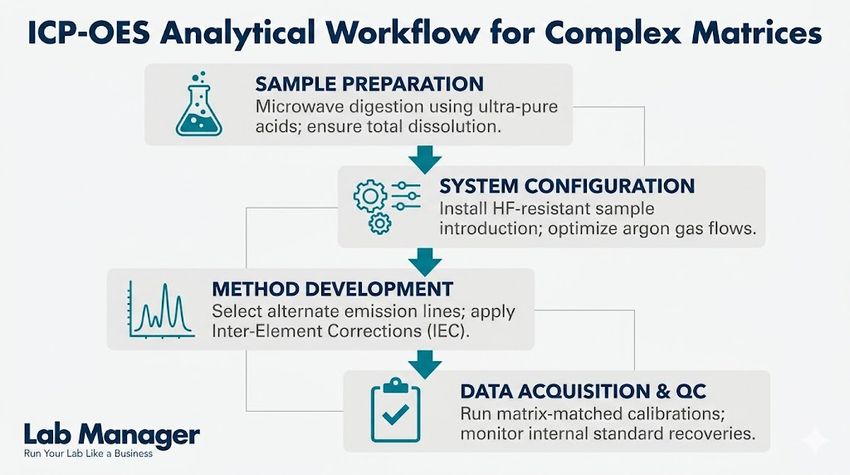
Sample preparation plays a key role in the Internal Standard Method for ICP-OES. Proper techniques ensure accurate and reliable results. Careful preparation reduces errors caused by sample inconsistencies or instrument fluctuations.
QC chemists must focus on precise handling during this stage. The following sections explain important steps to follow.
Adding Internal Standards
Adding the internal standard correctly is essential. The internal standard should be added at the same concentration to all samples and calibration standards. This helps balance variations during analysis.
Mix the internal standard thoroughly with the sample solution. Ensure uniform distribution to get consistent signals. Use calibrated pipettes for precise volume measurement.
Choose an internal standard element that does not interfere with analytes. It should have a similar behavior during the plasma excitation process.
Avoiding Contamination
Contamination can distort results significantly. Use clean labware and reagents to avoid introducing impurities. Rinse all containers and tools with high purity water before use.
Work in a clean environment to limit dust and airborne particles. Wear gloves and avoid touching sample containers directly.
Store samples and standards in closed containers to prevent contamination. Label everything clearly to avoid mix-ups.
Credit: www.labmanager.com
Calibration And Quantification
Calibration and quantification are key steps in ICP-OES analysis using the internal standard method. Accurate measurement depends on reliable calibration curves and correcting signal fluctuations. These steps ensure that the results reflect the true concentration of elements in the sample. Quality control chemists must understand these processes to improve data accuracy and consistency.
Establishing Calibration Curves
Calibration curves link the instrument response to known concentrations. Prepare a series of standards with varying element amounts and a fixed internal standard concentration. Measure the emission intensities of both analyte and internal standard for each standard. Plot the ratio of analyte to internal standard signal versus the known analyte concentration. This curve allows quantification of unknown samples by comparing their signal ratios. A well-prepared calibration curve reduces errors and improves the reliability.
Correcting Signal Variations
Signal variations occur due to instrument drift, sample matrix effects, or plasma fluctuations. The internal standard helps correct these changes. By comparing the analyte signal to the internal standard signal, you adjust for these inconsistencies. This correction improves precision by compensating for signal loss or enhancement. Regularly monitor the internal standard response during analysis to detect and correct variations. This step is crucial for maintaining data quality in routine testing.
Troubleshooting Common Issues
Troubleshooting common issues in the Internal Standard Method for ICP-OES is essential. It helps ensure accurate and reliable results. Understanding frequent problems saves time and reduces frustration. Below are key issues QC chemists often face and how to manage them effectively.
Signal Drift And Correction
Signal drift happens when the detector response changes during analysis. This can cause inaccurate readings and affect data quality. Drift may be due to plasma instability, sample introduction problems, or temperature changes.
Correct drift by using an internal standard that behaves like the analyte. Monitor the internal standard signal throughout the run. Adjust the sample signals based on the internal standard’s variation. Regularly check instrument conditions and perform maintenance to minimise drift. Proper calibration also helps reduce this issue.
Matrix Effects
Matrix effects occur when other elements in the sample affect the analyte signal. These effects can suppress or enhance signals, causing errors in quantification. Complex sample matrices often cause this problem.
Compensate for matrix effects by choosing an internal standard with similar physical and chemical properties to the analyte. Match the internal standard concentration closely to the analyte’s level. Use matrix-matched calibration standards for better accuracy. Dilution of samples may reduce matrix interference but avoid over-dilution that lowers sensitivity.
Best Practices For Qc Labs
Implementing best practices in QC labs ensures reliable and consistent results with the Internal Standard Method in ICP-OES. Accuracy and precision depend on strict adherence to protocols. Proper procedures help reduce errors and improve data quality. QC chemists must focus on key areas such as method validation and routine quality checks. These practices maintain instrument performance and safeguard result integrity.
Method Validation
Method validation confirms the accuracy of the Internal Standard Method. It tests precision, linearity, and detection limits. Validation involves running known standards and comparing results. This process ensures the method can reliably measure target elements. Documenting validation results supports compliance and audit readiness. Regular re-validation checks method stability over time. Validated methods reduce uncertainty and improve confidence in data.
Routine Quality Checks
Routine quality checks detect issues before they affect results. QC labs should run control samples with every batch. Monitoring internal standard signals helps identify instrument drift. Calibration curves must be checked daily for consistency. Maintenance tasks, like cleaning the nebuliser and spray chamber, keep instruments stable. Tracking quality data trends highlights gradual changes. Prompt action on deviations prevents data loss and rework.
Frequently Asked Questions
What Is The Purpose Of The Internal Standard In Icp-oes?
The internal standard in ICP-OES corrects signal variations and improves accuracy. It compensates for sample and instrument fluctuations during analysis.
How Does The Internal Standard Method Work?
The internal standard method adds a known compound to samples. It compares analyte signals to this standard, improving accuracy.
What Is An Internal Standard In Chemistry?
An internal standard is a known chemical added equally to all samples. It helps correct variability and improves measurement accuracy in analysis.
What Is The Purpose Of Internal Standard In Flow Chemistry?
Internal standards in flow chemistry correct variations in sample flow, detector response, and extraction efficiency, ensuring accurate and consistent results.
Conclusion
The internal standard method helps QC chemists get reliable ICP-OES results. It corrects variations during sample analysis, improving accuracy. Adding a known standard to all samples ensures consistent comparison. This simple step reduces errors and boosts confidence in data. Understanding and applying this method strengthens quality control processes.
Keep practising to see better precision in your tests.