
Bridging The Gap Between Academic Chemistry And Industrial Chemistry
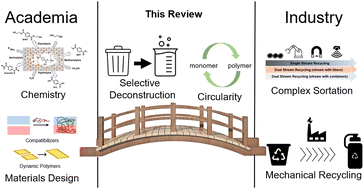
Chemistry is often called the central science because it connects physical sciences with life sciences and applied fields such as medicine and engineering. But while the world of academic chemistry is focused on understanding, discovery, and teaching, the world of industrial chemistry is about practical application, efficiency, and delivering products. Despite sharing the same foundation, these two areas often seem far apart. Many students and even professionals notice a gap between what is taught and researched in universities and what is needed or used in industry.
This gap is not just a matter of different goals. It affects how new chemists are trained, how innovations move from lab to market, and how society benefits from scientific progress. Closing this gap is vital. It helps students become job-ready, supports industry competitiveness, and ensures that academic discoveries lead to real-world solutions.
Let’s look in depth at why this gap exists, what problems it causes, and—most importantly—how to bridge it. Along the way, we’ll use real data, case studies, and research to understand the divide and the best ways forward.
Understanding The Divide: Academic Vs. Industrial Chemistry
To bridge the gap, we first need to understand why it exists. Academic chemistry and industrial chemistry differ in many ways—purpose, methods, culture, and results.
Key Differences
| Aspect | Academic Chemistry | Industrial Chemistry |
|---|---|---|
| Purpose | Discovery, understanding, teaching | Application, production, profit |
| Time Scale | Open-ended, long-term | Short-term, deadlines |
| Output | Papers, knowledge, graduates | Products, patents, processes |
| Resources | Limited funding, basic equipment | Large-scale facilities, investment |
| Risk Tolerance | High risk, novel ideas accepted | Low risk, proven methods preferred |
Different Goals, Different Pressures
- Academics are pushed to publish, get grants, and train students. Their success is measured by citations, awards, and new knowledge.
- Industry chemists must solve practical problems, reduce costs, and meet strict regulations. They are measured by product performance, time to market, and profit.
Real-world Example
A university lab might spend years studying a new catalyst’s behaviour. In industry, the same catalyst is only useful if it can be produced cheaply, used safely, and scaled up without problems. According to a study in *Nature Reviews Chemistry* (2017), fewer than 10% of published academic findings in chemistry ever see direct industrial use.
Why The Gap Matters
The gap is not just academic. It has real effects on careers, innovation, and society.
Impact On Students
Many chemistry graduates feel unprepared for industrial work. According to a Royal Society of Chemistry survey (2020), only 57% of chemistry graduates felt their university courses gave them the practical skills needed for jobs in industry.
Slower Innovation
When academic discoveries do not reach industry, society loses out. The *European Chemical Industry Council* reported in 2022 that time from academic breakthrough to industrial application averages 10–20 years, often due to lack of collaboration or understanding.
Economic Consequences
Chemistry is a key driver for sectors like pharmaceuticals, agriculture, and materials. The UK chemical industry alone adds over £30 billion annually to the economy. Bridging the gap can speed up innovation and boost competitiveness.
Causes Of The Gap
Bridging the divide means understanding its root causes. Most experts agree there are several main reasons:
- Different Skill Sets
- Academia focuses on theory, pure research, and writing.
- Industry needs teamwork, problem-solving, business understanding, and technical skills (like safety and scale-up).
- Lack of Communication
- Academic and industrial chemists rarely interact outside conferences.
- Industrial needs often don’t reach university syllabi.
- Funding and Incentives
- University funding rewards publications, not patents or products.
- Industry funds projects with clear commercial value.
- Intellectual Property (IP) Concerns
- Universities want to publish, but companies want to protect secrets.
- Different Definitions of Success
- For academia: A new paper or a grant.
- For industry: A new product on the market.
- Regulatory and Safety Barriers
- Industrial chemistry faces strict laws (e.g., REACH in the EU), which academics may not experience.
Skills Gap: What Students Lack, What Industry Needs
A major part of the divide is the skills gap. Let’s look at what is missing and what is needed.
Key Skills Lacking In Graduates
A 2021 survey by the *American Chemical Society* found that employers want these main skills:
- Problem-solving (83%)
- Communication (78%)
- Teamwork (76%)
- Safety awareness (72%)
- Project management (69%)
- Scale-up and process chemistry (65%)
- Data analysis and digital skills (62%)
However, universities often focus on:
- Theoretical chemistry
- Lab techniques on a small scale
- Writing reports and papers
Practical Example
A chemistry graduate might be excellent at running a reaction in a 100 mL flask. But in industry, the reaction might need to run in a 10,000 L reactor, with different safety, mixing, and cost issues. This is called the scale-up challenge.
Table: Academic Vs. Industrial Skill Emphasis
| Skill | Academic Focus | Industrial Need |
|---|---|---|
| Theoretical Knowledge | High | Medium |
| Lab Technique | Medium | Medium |
| Safety Protocols | Low | High |
| Scale-Up Skills | Low | High |
| Teamwork/Communication | Low | High |
| Business Awareness | Low | Medium |
| Data/Digital Skills | Low | High |
Non-obvious Insights
- Many students do not realise that regulatory knowledge is as important as lab skills in industry. For example, a chemist in a pharmaceutical company must know Good Manufacturing Practice (GMP) rules.
- Another missed point: Soft skills (like giving presentations, writing for non-experts, or leading a team) can be more important than advanced chemistry knowledge for career progress.
Strategies To Bridge The Gap
Bridging the gap is possible, but it requires effort from both academia and industry. Here are proven strategies that work.
1. Industry-academia Partnerships
Joint projects, co-funded research, and regular exchange between universities and companies help both sides.
- Example: The Innovate UK Knowledge Transfer Partnerships have helped over 800 businesses and universities since 2015.
- Benefit: Academics learn industrial needs; companies access new ideas and talent.
2. Internships And Placements
Giving students hands-on industrial experience is one of the most effective ways to make them job-ready.
- Data: The Royal Society of Chemistry found that 89% of students who did industrial internships felt better prepared for work.
- Tip: Universities should make internships a core part of chemistry degrees, not just optional.
3. Curriculum Updates
Courses must change to reflect real-world needs. This includes:
- More focus on safety, regulations, and scale-up
- Teaching digital tools (like process simulation software)
- Including teamwork and communication exercises
A good example is the *Chemistry Industry Liaison Committee* at the University of Manchester, which regularly updates course content with advice from industry partners.
4. Guest Lectures And Industry-led Modules
Bringing in industry experts to teach classes or lead modules exposes students to current industrial challenges.
- Benefit: Students hear first-hand what skills are valued and what working in industry is like.
5. Joint Research Centres
Centres where university researchers and company scientists work side by side speed up technology transfer.
- Example: The UK Centre for Process Innovation brings together academia and industry on topics like green chemistry and advanced materials.
6. Focus On Transferable Skills
Chemistry degrees should teach not just chemistry, but project management, business basics, and communication.
- Practical tip: Group projects that mimic industrial teams help develop these skills.
7. Address Intellectual Property (ip) Issues
Universities and companies must agree on how to share and protect IP. Clear agreements allow for smoother collaboration and more willingness to share results.
8. Support For Start-ups And Spin-offs
Universities can help researchers turn discoveries into businesses by offering incubators, funding, and business training.
- Fact: According to Nature Biotechnology, academic spin-offs account for 20% of new chemical start-ups in Europe.
9. Government Policies And Funding
Governments can fund joint projects, provide tax breaks for R&D, and create national centres that connect academia and industry.
- Example: The European Union’s Horizon Europe programme funds many such collaborations.
10. Regular Feedback From Industry
Universities should get regular feedback from employers about what skills are needed. Advisory boards with industry members help keep courses relevant.
Non-obvious Insights
- One often-missed strategy: Reverse sabbaticals, where industry scientists spend time in academia to teach or guide research.
- Another: Encouraging students to take short courses or certifications in areas like patent law or regulatory affairs, which are highly valued in industry but rarely taught in chemistry degrees.
Case Studies: Successes And Challenges
Case Study 1: Pfizer And University Collaborations
Pfizer has long worked with universities on drug discovery. In a 2019 project with Cambridge University, academic and industrial teams developed a new synthetic route for a key drug intermediate, cutting costs by 30%. The project succeeded because students worked in both labs and industry mentors helped design experiments.
Case Study 2: Basf And The Chemcoast Park
BASF, the world’s largest chemical producer, partners with German universities through the ChemCoast Park. This allows students to work on real production issues, such as reducing waste or improving safety, leading to new patents and job offers for graduates.
Case Study 3: Challenges In Technology Transfer
A study by the *American Chemical Society* (2021) showed that only 15% of university patents in chemistry are licensed for commercial use. The main barriers: lack of market insight in academia and slow legal processes.
Data Table: Technology Transfer Outcomes
| Region | % Academic Patents Licensed | Average Time to Market (years) |
|---|---|---|
| USA | 17% | 12 |
| Europe | 13% | 15 |
| Asia | 10% | 18 |
Lessons Learned
- Collaboration works best when both sides benefit.
- Real-world problems motivate students and lead to faster innovation.
- Legal and cultural barriers still slow down progress.
The Role Of Digital Transformation
Digital tools are reshaping both academic and industrial chemistry. Understanding and using these tools is now essential.
Key Digital Skills
- Data analysis: Industry uses big data to optimise processes and predict problems.
- Automation: Robots and software speed up routine tasks.
- Machine learning: Used for predicting reaction outcomes or designing new materials.
A 2022 *McKinsey* report found that digital skills are now required in 70% of chemistry jobs in the pharmaceutical sector.
Academic Vs. Industrial Adoption
Academia often lags behind in adopting digital tools due to funding limits and less focus on practical outcomes. Industry invests heavily, as digitalisation cuts costs and improves safety.
Closing The Digital Gap
- Universities should teach coding, data science, and digital lab tools as part of chemistry degrees.
- Industry can offer digital training to new hires and sponsor university digital labs.
Safety: From Classroom To Factory Floor
Safety is a top concern in industry, but often gets less attention in university labs.
Academic Safety Culture
- Focus on basic lab safety: Goggles, gloves, fume hoods.
- Less emphasis on risk assessment, emergency planning, and process safety.
Industrial Safety Culture
- Strict protocols, regular audits, and advanced safety systems.
- Legal requirements (e.g., OSHA, REACH) make compliance non-negotiable.
Bridging The Safety Gap
- Universities should teach industrial safety standards and require risk assessments for all projects.
- Industry can host safety workshops and provide real-world case studies.
A 2021 *Chemical & Engineering News* report found that 60% of industrial chemical accidents involved staff without proper safety training—many of whom had academic backgrounds.
Measuring Success: How To Track Progress
Bridging the gap is not a one-off task. It needs regular measurement and improvement.
Key Indicators
- Graduate employment rates in industry roles
- Time from academic discovery to commercial product
- Number of joint research projects and patents
- Feedback from employers on graduate skills
Tracking these metrics helps universities and companies see what is working and where more effort is needed.
The Future: Trends And Predictions
Green Chemistry
Industry is moving fast towards green chemistry—safer, cleaner, and more sustainable processes. Academia must update courses and research to match these needs.
Interdisciplinary Work
Boundaries between chemistry, engineering, computer science, and biology are blurring. Future chemists need to work across disciplines.
Lifelong Learning
With technology changing rapidly, both academic and industrial chemists must keep learning new skills throughout their careers.
International Collaboration
Global challenges—like climate change and pandemics—require international teams. Universities and companies should encourage student exchanges and joint global projects.

Credit: www.news-medical.net
Frequently Asked Questions
What Is The Main Difference Between Academic And Industrial Chemistry?
Academic chemistry focuses on understanding basic principles, discovery, and teaching. Industrial chemistry is about applying chemistry to make products, solve problems, and deliver value to customers and society. The goals, pressures, and success measures are different in each.
Credit: pubs.rsc.org
Why Do Chemistry Graduates Often Struggle In Industry Roles?
Many graduates lack key skills needed in industry, such as teamwork, communication, safety awareness, and process scale-up. University courses often focus more on theory than on practical, real-world problems.
How Can Universities Make Chemistry Degrees More Relevant To Industry?
By working closely with companies, updating courses regularly, offering internships, and teaching transferable skills like project management, safety, and digital tools. Guest lectures and joint research also help.
What Role Does Digital Technology Play In Closing The Gap?
Digital tools like data analysis, automation, and machine learning are now essential in industry. Teaching these skills at university helps graduates succeed and helps academic research stay relevant.
Where Can I Find Examples Of Successful Academic–industrial Partnerships?
The *UK Centre for Process Innovation* and programmes like *Innovate UK Knowledge Transfer Partnerships* are strong examples. For more, see the Royal Society of Chemistry website.
Bridging the gap between academic and industrial chemistry is not simple, but it is possible. By working together, updating courses, valuing practical skills, and sharing knowledge, both worlds can benefit—and so can society as a whole. The future of chemistry depends on closing this divide, and every student, professor, and company has a role to play.

Credit: www.amazon.com